
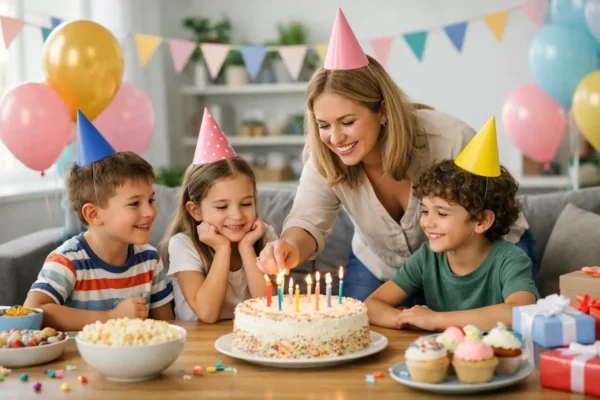
The cake is ordered, the group chat is active, and suddenly one question takes over everything else – how do you actually run birthday party at home without spending the whole event managing noise, snacks and overexcited children?
The good news is that a great home party does not depend on having a huge living room, a perfect schedule or endless DIY energy. What matters most is flow. When children know what is happening next, when the pace suits their age, and when one part of the party leads naturally into the next, the whole celebration feels easier. Parents feel it too. Instead of constantly stepping in, you can actually enjoy the day.
How to run birthday party at home without chaos
If you want to run a birthday party at home successfully, think less about squeezing in lots of activities and more about guiding the energy of the room. Children do best when the party has a clear beginning, middle and end. A simple structure beats an overpacked plan every time.
Start with arrival time that feels relaxed rather than rushed. The first 15 to 20 minutes should allow children to settle in, say hello, and get comfortable in the space. If you launch straight into high-energy games before everyone has arrived, latecomers can throw off the rhythm and your child may feel distracted.
After that, move into the main entertainment block. This is the section that carries the party. For younger children especially, performer-led entertainment works well because it keeps attention focused in one direction and removes the pressure on parents to explain rules, reset games or call everyone back together every few minutes. The biggest win is not just fun. It is control with a cheerful atmosphere.
Then you break for food, sing happy birthday, serve cake and allow a final winding-down period before collection. That shape feels natural to children. It also helps avoid the common problem of the party peaking too early and becoming harder to manage later.
Plan for the room you have, not the room you wish you had
One of the biggest worries for parents is space. The living room may not be large. The condo function room may look roomy at first but feel crowded once tables, adults and prams are in place. That is normal.
To run a birthday party at home well, your layout matters more than your square footage. Clear one main activity zone where children can sit or gather comfortably. Keep food in a separate area if possible, even if it is just a dining table a few steps away. That small separation helps children understand when it is time to watch, join in, eat or move around.
You also do not need to fill every corner with decorations or activity stations. Too much visual clutter can make a home party feel more frantic. A clean setup often works better, especially for ages 3 to 7, because it keeps attention on the experience rather than on distractions.
If your child is older, from about 8 to 12, they may enjoy a little more movement and interaction. Even then, the room should support the programme rather than compete with it. Chairs pushed back, breakables moved aside and one obvious focal point can make the whole party feel more organised.
Timing matters more than parents think
Many home parties go off track because the timing looks fine on paper but does not match real children. A two-hour party is often ideal. Long enough for proper entertainment, food and cake. Short enough to keep energy positive.
For children aged 3 to 5, shorter and tighter is usually better. They respond well to quick transitions and clear direction. If there are long gaps, they tend to wander, cling to parents or create their own games, which is when things get noisy and harder to steer.
For children aged 6 to 9, you have more flexibility, but pacing still matters. They like excitement, but they also enjoy being part of something that feels special and well led. If the host sounds confident and the programme keeps moving, they stay with you.
Older children can handle a bit more freedom, but that does not mean no structure. In fact, pre-teens often notice poor planning faster than younger children do. They want to feel the event has momentum, not dead time.
A practical rule is to avoid stacking too many separate segments. Three strong sections are usually enough: welcome and settle, main entertainment, then food and cake. If you add too much, the party can start feeling chopped up.
Entertainment should reduce work, not create more of it
This is where many parents accidentally make things harder for themselves. They plan games, prizes, music, snack timing and cake cutting, only to realise on the day that they are also expected to host adults, answer the door and comfort their own child if emotions run high.
Good birthday entertainment should take pressure off you. It should keep children engaged while parents relax and enjoy. That means more than simply standing in front of a group and making noise. The right entertainer manages attention, reads the age group, adapts to the room and keeps the party moving without making it feel rigid.
That is especially valuable at home, where there is no venue staff to guide the flow. A structured, interactive programme can turn an ordinary living room or condo space into a proper party setting because the children are focused on the experience, not running in ten directions.
For this reason, many parents prefer a performer-led home party rather than trying to self-run every activity. It gives the celebration a clear centre. It also means you do not have to be the referee.
Keep food simple and timed well
Food can either support the party or interrupt it. The easiest option is to serve it after the main entertainment block. If you serve party food too early, children may lose momentum, drift around or become fixated on icing and crisps before the key part of the celebration has even started.
Keep the menu simple and child-friendly. Home parties do not need an elaborate spread. What parents usually want is food that is easy to serve, easy to eat and unlikely to create a huge mess. The birthday child may care deeply about the cake. Guests are usually happy as long as they are fed at the right moment.
If adults are staying, consider them separately rather than trying to make one food plan suit everyone. A few easy bites and drinks for grown-ups are often enough. It helps the party feel welcoming without turning the day into a catering project.
Expectations are easier to manage when invitations are clear
A smoother party often starts before guests arrive. If you are inviting a mixed-age group, be realistic about whether the programme suits everyone. A party planned for a 4-year-old and their nursery friends will feel different from one designed for a 10-year-old and schoolmates.
Your invitation should make the essentials clear: start time, finish time, venue details, whether parents stay, and anything practical such as socks for indoor venues or food allergy notes. That small bit of clarity prevents last-minute confusion and gives the whole event a more organised feel.
It also helps to think carefully about guest numbers. Bigger is not always better at home. A smaller group that is fully engaged often creates a more memorable party than a crowded room where no one can hear instructions properly.
The best home parties feel easy because they are led well
When parents imagine a successful party, they often picture happy children, nice photos and a smooth cake moment. What creates that result, though, is not luck. It is good pacing, sensible planning and entertainment that knows how to hold a room.
That is why professionally led home parties are such a relief for many families. With the right host, you do not need a big space, you do not need to plan every game, and you do not need to control the kids all afternoon. You simply need a format that works.
For families in Singapore planning a celebration at home or in a condo function room, that kind of support can make all the difference. Explorer Joe is built around exactly that idea – a lively, structured birthday experience that keeps children engaged while parents breathe a little easier.
If you are planning your child’s next celebration, remember this: children rarely judge a party by how much was spent or how many decorations filled the room. They remember whether it felt exciting, whether they were included, and whether the day moved with energy. Get the flow right, and home can be the perfect place to celebrate.